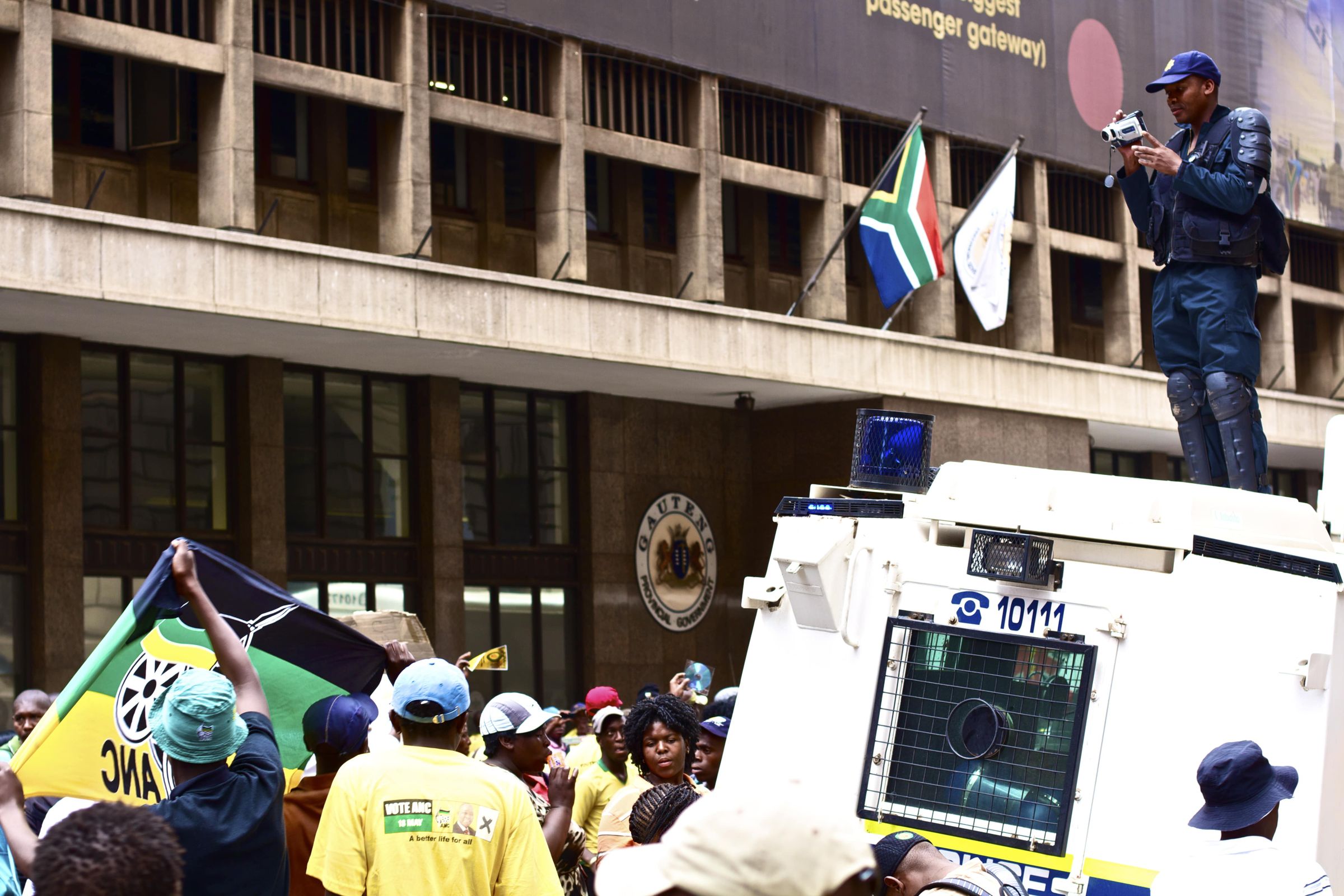
The ANC’s slide from 57.5% of the national vote in 2019 to 40.18% in 2024 is the market signal that makes the local elections due on 4 November the most reliable leading indicator available for the 2029 national contest. In 2016 the party lost control of Joburg and Nelson Mandela Bay for the first time, a warning that preceded its fall to 57.5% in 2019 and just 50.4% in Gauteng. In 2021 its share of the national vote dropped further, to 45.59%, the clearest possible signpost before it slid again, to 40.18%, in 2024. The dominant political brand is steadily losing market share.
The pattern is simple: no better yardstick exists for the next national and provincial elections than the local elections that come before. Each municipal poll has its own dynamics, yet ANC leaders in both 2019 and 2024 expressed surprise at the speed of their decline, and the only reason they could be surprised was that they had not been watching the local results.
That history frames the stakes for November. The upcoming election is likely to confirm that the ANC has fallen further, but the real question is the rate of decline. If the party were to fall below, say, 30%, that would suggest it could be at that level, or lower, by 2029. Such a figure would represent a fundamental repricing of the country’s dominant political brand.
The same logic applies to the competition. If the DA were to lift its share of the national vote to about 30%, an outcome the source itself describes as unlikely, the implications for the governing relationship would be enormous. This election could mark the start of a major reconfiguration of power between the ANC and the DA, forcing them into a far more equal partnership in national government after 2029 than they currently are. Alternatively, if the results show the ANC remains the biggest party in the country, the present power relationship could be confirmed rather than unsettled.
Beyond vote shares, the results could illuminate what may be the biggest longer-term question: whether future national coalitions will be durable. If the poll returns a landscape of several parties each holding roughly 20% support but refusing to work with one another, that would point to a strong chance of no durable national coalition in 2029. If, instead, voters back parties willing to cooperate above the 50% mark, the opposite conclusion might follow.
Local coalition choices will offer their own signals on deal-making. One possible outcome would see the DA outperform the ANC in Joburg, with the two parties choosing each other over MK and the EFF. That would leave the DA holding the mayoralty with the ANC as the weaker partner, a configuration that might foreshadow future national arrangements. The alternative is the ANC partnering with MK and the EFF, a route that would give it a stronger hand both in the power balance between the parties and in the number of councillors it could count on. If those coalitions functioned at municipal level, it would be tempting for the ANC to replicate them in national government three years later.
Meanwhile, the election will reveal which issues are appreciating in political value. If parties campaigning explicitly or implicitly on immigration gain strong support, that would indicate the issue could become more urgent by 2029, and some parties already hope to make it the defining question of that election, starting the process now. Crime offers another potentially lucrative theme. Given the chaos in the top leadership of the police, it is slightly strange that no party has laid groundwork on police reform, but in the month until 4 November some may try. Current levels of violent crime, and the state’s consistent inability to deal with them, create fertile ground for any party advocating a much tougher approach, including the reintroduction of the death penalty. If such a campaign gains traction, it would force the ANC to defend the abolishment of the death penalty, an awkward position with some voters.
Leadership is the third prism. Geordin Hill-Lewis faces his first election as DA leader, meaning he is the party’s symbol and figurehead for the first time. He has a strong imprint in Cape Town politics as its mayor, but the real test is whether he can campaign strongly in Gauteng. If he is asked questions about race on the campaign trail and cannot give an articulate response that resonates with black voters, that might suggest he will struggle to be a truly national leader in 2029. This is his moment to craft a political identity, for himself and the party, distinct from those of John Steenhuisen and, crucially, Helen Zille. If he succeeds, he would put other parties on notice that he might grow his party over three years.
By contrast, the ANC’s own leadership picture looks far messier. Its reliance on President Cyril Ramaphosa on election posters, and its inability to decide on mayoral candidates, reveal a party in apparent turmoil. With the leadership race now wide open, prospective candidates should be crisscrossing the country, yet the fact that Deputy President Paul Mashatile is not doing so is politically significant, and no ANC leader appears to be doing it publicly either. That leaves voters unable to know what the ANC leader in 2029 will be like, and means whoever takes over will lack the campaigning experience this election would otherwise provide.
Smaller-party leaders also have an opening. With many issues in the current zeitgeist, whoever best harnesses one, whether through social media or a viral speech clip, might make a mark, generate media coverage and build a following that feeds into the national election.
One caveat tempers all of this: turnout. These polls will be a turnout election, with some voters showing up simply to vote against the incumbent. In national elections, where local dynamics are less prevalent, turnout patterns might differ significantly, so the signpost must be analysed carefully before predictions about 2029 are made. Even so, anyone with a stake in South Africa’s political market should watch closely what the next month reveals.