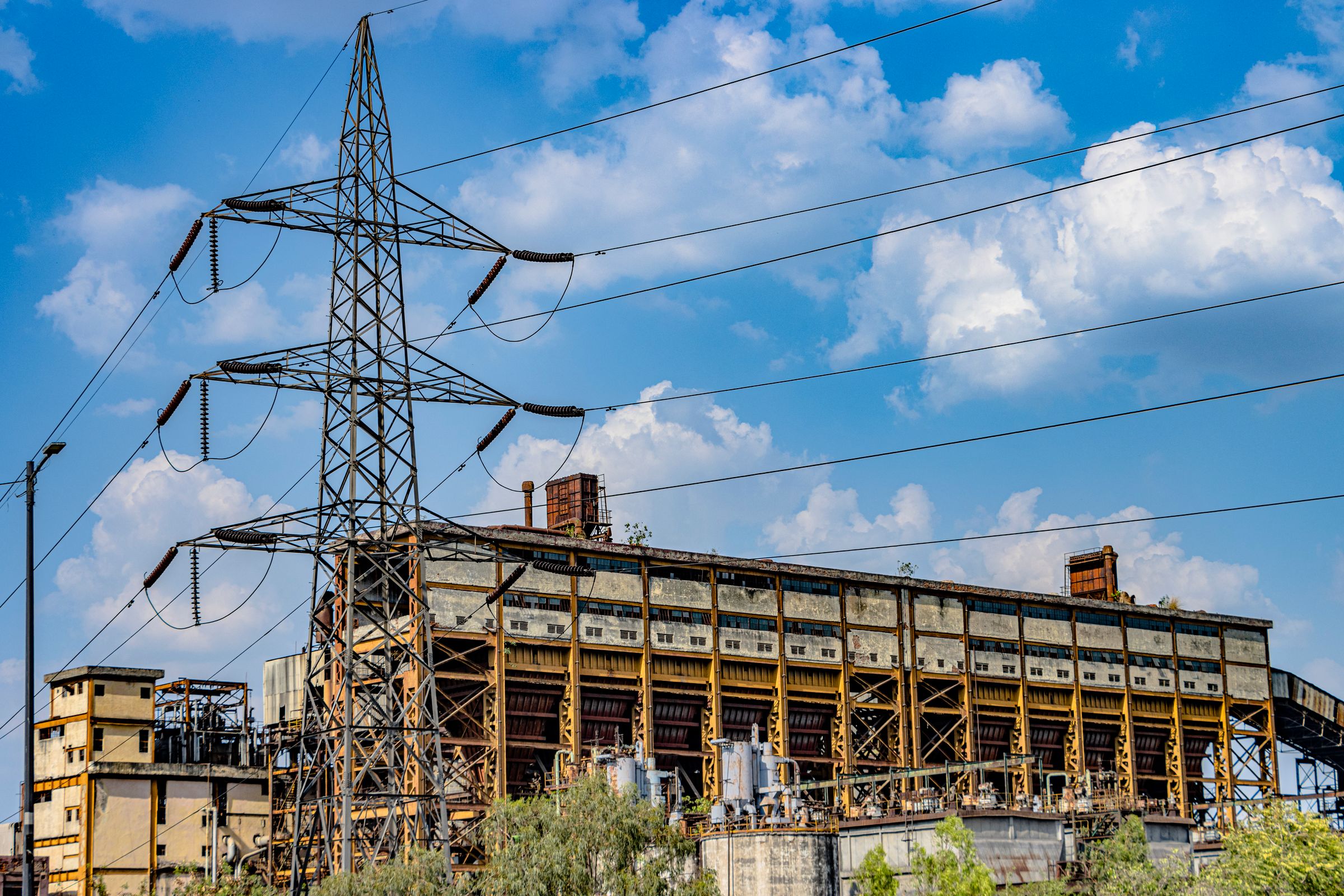
Eskom’s 476-day streak without load shedding, reported on 4 September 2026, is now a matter of record, and the institutions responsible have the numbers to prove it. Power station performance stands at its highest level since 2020. The national grid met electricity demand in full through the 2026 winter. For a utility and a government that spent years managing a crisis which disrupted nearly every part of economic and social life, this is a significant achievement.
Yet the achievement raises an accountability question that policymakers cannot defer: what did the crisis leave behind, and who is responsible for repairing it? Load shedding was typically measured in hours without electricity, stages of power cuts, or megawatts unavailable from the grid. Those metrics captured the immediate emergency. They say far less about the longer-term damage to businesses, workers and the country’s industrial base, damage that now falls to government and regulators to address as part of any credible industrial strategy.
The evidence for that damage is set out in two recent studies published in Energy Policy and Energy Economics, which identify three channels through which the electricity crisis weakened South African manufacturing: employment, investment and exports. The findings carry direct implications for how the state designs energy and industrial policy from here.
The employment channel is the most visible. Manufacturing jobs depend on production running long enough for firms to keep workers productively engaged, and repeated interruptions broke that continuity. When machinery stops and output falls, maintaining employment becomes more costly even as production becomes less predictable. The research confirms that the crisis was associated with significant job losses in manufacturing, particularly in sectors more dependent on the energy sector through output and input linkages, and that these losses affected both formal and informal employment. The consequences extend beyond headcounts. Factories are places where workers acquire experience in operating machinery, managing production and solving technical problems. When jobs disappear, some of those skills disappear with them, eroding the human and organisational capabilities needed to raise productivity and build more sophisticated industries.
The investment channel is less visible but arguably more consequential for policy. Firms invest when they expect to produce and earn a return, and years of unreliable electricity made those calculations far harder. Manufacturers facing repeated cuts had little reason to expand factories, buy new machinery or adopt new technologies. Capital that could have financed expansion was instead diverted to generators, diesel, batteries and other means of keeping existing production alive. Such spending was necessary for survival, but a generator that keeps a factory running is not the same as a machine that lets it produce more efficiently. The studies find that the crisis reduced capital investment among manufacturing firms, which is one reason its effects may outlast load shedding itself. The country did not only lose production during power cuts; it lost investment that could have created future production.
The export channel compounds the problem. Competing internationally requires delivering goods reliably, at agreed quality and on time, and unpredictable production lines made that difficult. The research shows the crisis harmed the export activities of South African manufacturers. That loss goes beyond earnings, because selling into demanding international markets pushes firms to improve quality, learn from customers and become more productive. Losing access to such markets weakens future industrial growth.
These three effects reinforce one another. Job losses reduce opportunities to build industrial skills; lower investment means fewer new machines and production lines; weaker exports reduce exposure to competitive markets. This is how an electricity crisis gradually becomes an industrial crisis. It is also worth noting that South Africa entered the worst years of load shedding already contending with high unemployment, weak private investment, sluggish productivity growth and premature deindustrialisation. Electricity shortages did not create these problems, but they made an already difficult situation worse, which is precisely why the recent supply recovery should not breed complacency among those in office.
What changed: the policy challenge itself. National load shedding may have eased dramatically, but distribution networks, municipal electricity systems and the cost of power increasingly determine whether households and businesses actually experience secure supply. The analysis, discussed in a recent African Arguments piece (https://africanarguments.org/2026/10/beyond-load-shedding-how-south-africas-electricity-crisis-scarred-industry/), argues that keeping the lights on is not enough: electricity reform must be treated as part of industrial policy. That does not mean simply providing cheaper power to every business. It means recognising that decisions about electricity shape what firms can produce, where they invest and whether they can compete.
Different industries face different exposures. A highly energy-dependent manufacturer is more vulnerable to unreliable supply than many service businesses, and a large multinational may finance its own backup systems while a smaller domestic manufacturer cannot. Policy therefore needs to identify which industries are strategically important, how vulnerable they are, and which firms have the least capacity to protect themselves.
South Africa already has foundations to build on. The South African Renewable Energy Masterplan seeks to connect renewable energy expansion with domestic manufacturing, skills and technology development, while the Just Energy Transition Investment Plan frames the transition as an opportunity for industrial development and economic diversification. Achieving these ambitions, however, will be difficult unless energy and industrial policy are brought much closer together. Building solar panels, batteries, electric vehicles or other green industries requires more than policy targets; firms must believe they can obtain electricity reliably, at a competitive price, in the places where they want to invest.
The experience also carries a warning for other developing countries. Electricity is not simply another service supplied to the economy; it helps determine what kind of economy can develop. When power is unreliable for long periods, firms invest less, employ fewer workers, lose customers and may retreat into less productive activities. And once factories close, skilled workers leave and business relationships disappear, rebuilding them is difficult. South Africa’s electricity crisis may have eased, but under the mandate of its policymakers now lies the longer task of repairing its economic consequences.