Lede
South Africa has firmly pushed back against Rebuts U.S. criticism of the G20 climate declaration adopted in Johannesburg, insisting the agreement was shaped through full consensus among all member states. According to spokesperson William Baloyi, the declaration places Africa’s climate priorities — especially adaptation financing and resilience efforts — at the center of global climate policy at a time when developing nations continue to face disproportionate climate threats. His statement comes amid heightened global attention on climate funding equity and the growing responsibility of major economies to support vulnerable regions.
What Happened
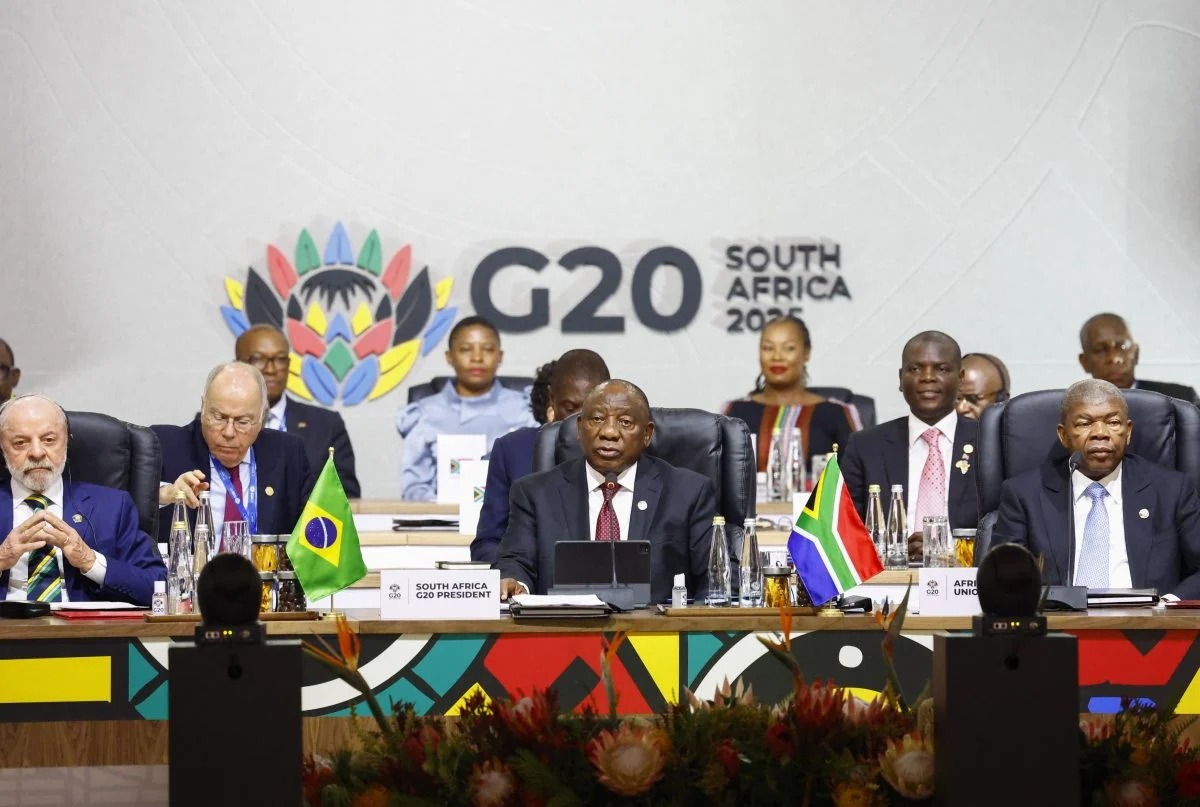
Held from 21–23 November 2025, the Johannesburg G20 Summit brought leaders from the world’s most influential economies to negotiate solutions for climate change, global debt challenges, energy reform, and sustainable development. While negotiations featured moments of tension, South Africa emphasized that the final climate declaration emerged through collaborative, transparent, and inclusive discussions, with every nation — including the United States — participating in multiple review rounds.
The dispute began after U.S. officials claimed parts of the agreement were “advanced without adequate consultation,” implying South Africa and its Global South allies had driven the process without broad approval. South African authorities dismissed the allegations, stating that every proposal underwent extensive deliberation and that no member country was sidelined during drafting.
The Johannesburg declaration highlights four major climate priorities:
- Stronger adaptation financing for high-risk and developing nations
- Rapid scaling of renewable and low-carbon energy infrastructure
- Enhanced resilience planning for climate-induced disasters
- Fair and sustainable global financing structures for emerging economies
These priorities reflect the realities of African and other vulnerable nations — regions that often face severe climate damage despite contributing the least to global emissions.
Official Statements
Speaking at a press briefing on 24 November 2025, government spokesperson William Baloyi clarified:
“The Johannesburg climate declaration represents genuine consensus. Adaptation funding — a core African priority — was integrated with full agreement, and no member country dictated the process.”
President Cyril Ramaphosa supported this position, saying:
“Developing nations must be at the table, not on the margins. The United States raised concerns, but the final text is a collective decision by the entire G20.”
Ramaphosa emphasized that the declaration includes clear implementation strategies, ensuring countries remain accountable for meeting their climate commitments.
Environment Minister Barbara Creecy added:
“This is a practical and actionable declaration. It outlines concrete timelines for renewable energy expansion and introduces adaptation measures that will support Africa and other climate-vulnerable regions.”
Public Reaction & Social Media
The G20 climate decision triggered extensive debate across digital platforms, international news outlets, and climate advocacy groups. Many praised South Africa for placing adaptation at the forefront — an area historically overshadowed by mitigation efforts.
On X (formerly Twitter), @ClimateAfrica commented:
“Johannesburg finally puts adaptation funding at the heart of global climate policy. A long-overdue step for developing nations.”
LinkedIn discussions among climate analysts revolved around the feasibility of meeting the financial commitments. While many were optimistic about progress, others urged caution, pointing to previous instances where climate pledges stalled due to insufficient funding.
U.S. analysts were similarly divided. Some questioned whether the financial scale of the commitments was achievable, while a New York Times analysis stressed that “the credibility of the declaration will depend on the robustness of its implementation mechanisms.”
Impact, Analysis, or What Happens Next
Experts say the Johannesburg declaration could reshape global climate priorities by placing adaptation support and financing on equal footing with mitigation. Dr. Linda Tshabalala, climate policy expert at the University of Cape Town, highlighted:
“This agreement is strategic and symbolic. It positions Africa’s urgent climate needs at the center of the G20, something we have not seen before.”
Working groups established under the declaration will begin meeting in early 2026 to determine how adaptation funds will be allocated, how progress will be measured, and how resilience initiatives can be implemented efficiently.
The summit also revealed a shifting geopolitical landscape: developing nations — particularly members of the Global South — are now exerting greater influence in shaping major climate agreements, even against opposition from longstanding global powers like the United States.
Expert Commentary
Professor Johan van Rensburg, University of Pretoria, noted:
“The Johannesburg declaration shows that multilateral consensus is still possible, even with disagreements. It also demonstrates that developing nations can successfully lead global climate policy.”
Climate finance consultant Ayanda Ndlovu added:
“Adaptation funding is essential. African countries face growing climate shocks, from extreme heat to devastating floods. If implemented, these commitments could significantly increase resilience across the region.”
Historical / Political Context
The 2025 G20 Summit was the first ever held on African soil, giving South Africa a rare opportunity to highlight historically overlooked issues such as climate adaptation, energy equity, and sustainable development financing.
For decades, African nations have had limited influence in shaping global climate policy, despite experiencing the most severe environmental consequences. Johannesburg’s focus on adaptation aims to correct this gap by embedding resilience into long-term climate planning.
Related Incidents or Precedents
The Johannesburg declaration continues a broader push from developing countries demanding equitable climate financing. Earlier G20 summits — including India 2023 — emphasized mitigation and renewable energy, but did not include strong commitments to adaptation support.
Johannesburg marks a shift away from this pattern by incorporating adaptation targets, financing frameworks, and implementation pathways directly into the G20’s climate agenda.
Background on Institutions Involved
The G20, established in 1999, brings together 19 countries plus the European Union and represents roughly 85% of global GDP. As host of the 2025 summit, South Africa was responsible for directing negotiations, coordinating climate priorities, and ensuring fairness during decision-making.
The climate declaration was shaped through collaboration between ministers, finance experts, climate scientists, and policymakers across all G20 countries — an effort South Africa describes as transparent and consensus-based.