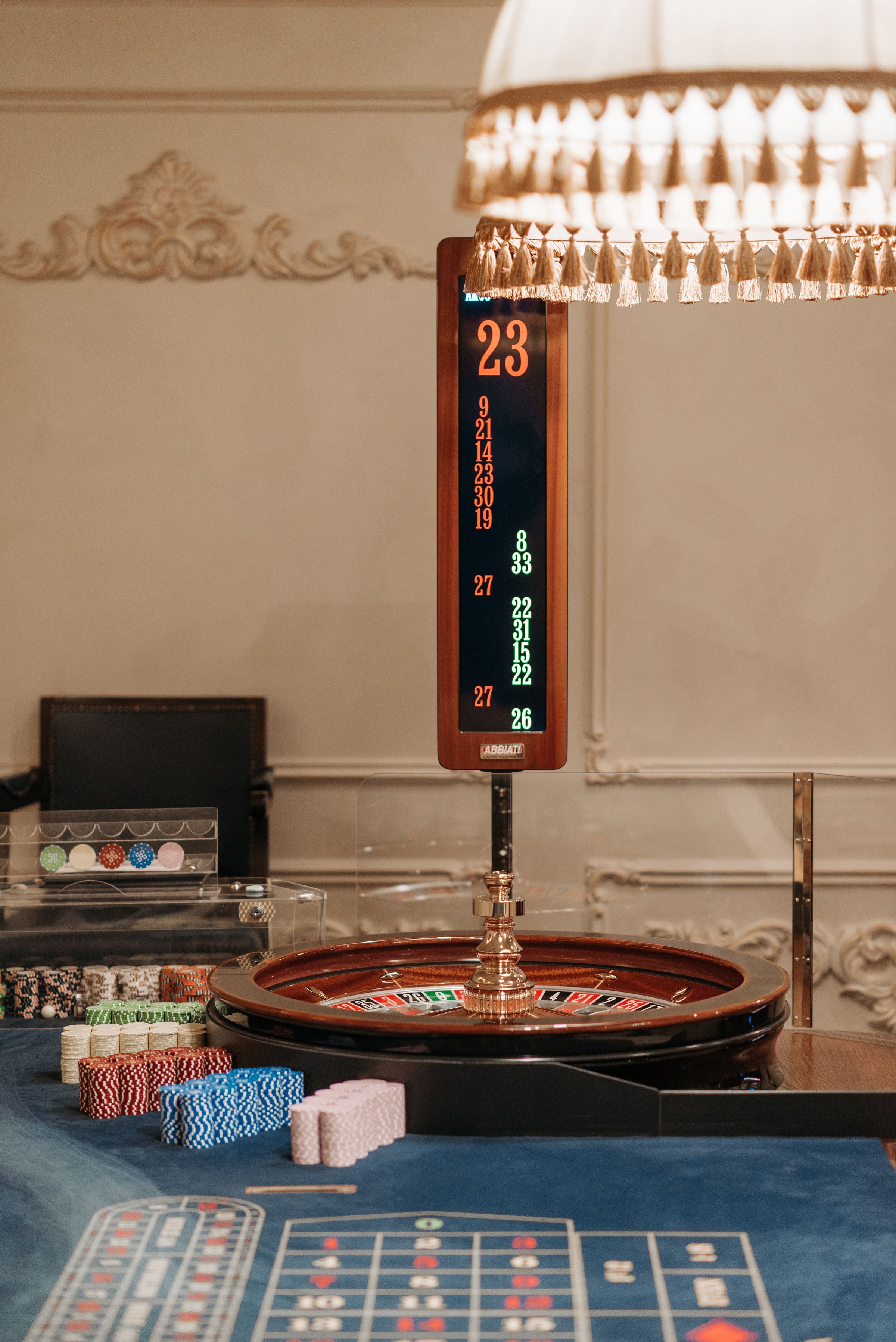
The first app a South African student opens when the allowance lands is increasingly a betting site, and the people the National Gambling Board worries about most are exactly that student and the grant recipient across town. Persistent unemployment and rising living costs, the Board says, have pushed economically vulnerable people to treat gambling as a substitute for income, with a marked escalation among tertiary students receiving National Student Financial Aid Scheme allowances and among recipients of South African Social Security Agency grants. Behind them stand households whose spending tells the same story: Statistics South Africa’s Personal Services Industry report finds that gambling activities, primarily online bookmaking, now consume 54.5% of total household expenditure allocated to recreation, sport and culture.
What those users encounter is a site that accepts rands, carries a South African web address and, at the foot of the page in a grey font designed not to be read, displays a gambling licence from Curaçao. None of that makes the site legal. All of it makes it look legal, which Sean Coleman, CEO of the South African Bookmakers’ Association, calls the whole trick. “Don’t be fooled by appearances,” he warns. That gap between what looks regulated and what actually is sits at the centre of the country’s online betting problem.
The scale of the market is not in dispute. In the 2025/26 financial year, national gambling turnover reached R1.76-trillion, up from R1.50-trillion the year before. Gross gambling revenue, a polite way of saying what punters lost, rose 13.4% to R84.5-billion, and provinces collected R6.45-billion in taxes and levies, up 10.9%. Betting now takes 74% of national gross gambling revenue, worth R62.2-billion, and 80% of turnover. Three years ago betting revenue stood at R23.7-billion and has since grown more than two-and-a-half times. Casinos, the industry around which the regulatory architecture was originally built, are down to 19% of revenue, with limited payout machines at 5% and bingo at 2%. Mobile accounts for 91% of digital wagering.
The tax take, though, tells a quieter story. Betting generates 74% of revenue but only 64% of provincial gambling taxes and levies. Traditional casinos, on 19% of revenue, still contributed about R1.66-billion, roughly a quarter of the total, and limited payout machines another R542.8-million. The part of the industry that is growing is paying proportionally less than the part that is shrinking, because the system remains weighted towards the world it was built for rather than the world that exists.
Nobody is arguing that betting should be banned. Online sports betting is legal, licensed, taxed and enormously popular. The fight is over who sets the terms, and the machinery for deciding that is strained. Under Schedule 4 of the Constitution, gambling is a concurrent competence of national and provincial government, which in practice stacks the National Gambling Act, written in 2004, three years before the first iPhone, on top of nine provincial licensing authorities. The Board has said itself that its statutory powers to enforce compliance are limited when provinces adopt divergent standards or issue approvals that push national boundaries. The bodies that licence operators are the same bodies that collect from them, and the money is not spread evenly: Mpumalanga and the Western Cape account for 30% and 29% of national collections respectively.
Into that gap steps Communications and Digital Technologies Minister Solly Malatsi, who has framed the issue as a duty. Sports betting offers real revenue opportunities for teams and federations, he says, but the state has to be alert to what online gambling does in a country where many people are “poor, unemployed, desperate, and have low levels of financial literacy”. He has asked what measures can appropriately be taken within the Independent Communications Authority of South Africa’s regulatory mandate where electronic communications networks are used to facilitate access to gambling products. The Board has identified the missing tool: there is no operational, state-level IP or website-blocking architecture, and networks are what Icasa regulates.
Wayne Lurie of Lurie Inc Attorneys is having none of it. “A bet does not become unlawful simply because it is placed on a cellphone,” he says, adding that neither the minister nor Icasa can use telecommunications regulation to rewrite gambling law or assume powers Parliament has assigned elsewhere. “Consumer protection cannot create legal powers that do not exist.”
Meanwhile, there is the line everyone agrees on and nobody can quite police. Interactive online casino gambling, meaning slots and table games, is prohibited under Section 11 of the National Gambling Act, and the Remote Gambling Bill (B11-2024) that would legalise and regulate it is unlikely to be enacted before 2027. Demand did not wait. Provincial bookmaker licences cover fixed-odds wagering on sporting and contingent events, and operators read “contingent events” generously enough to fit virtual roulette, electronic slot simulations and live-dealer games. In October 2025 the Supreme Court of Appeal shut that reading down. The software layer followed: the Board advised the Department of Trade, Industry and Competition and the National Regulator for Compulsory Specifications that Remote Gaming Server architectures facilitate unlawful interactive gambling, and the NRCS halted all new, renewed or extended Letters of Certification for RGS products. For compliant operators the pipeline is slow and costly, with testing requirements such as SANS 1718 and provincial reviews running three to 12 months. For operators outside the jurisdiction there is no pipeline at all.
Offshore is the real issue. Because online random number generator casino games remain prohibited, roughly 62% of online gambling activity takes place on unlicensed sites, diverting more than R50-billion (€2.4-billion) in gross gambling revenue offshore each year. An estimated 16 million South Africans use them. The Consumer Goods Council of South Africa puts the direct tax loss at about R7.7-billion a year and the displacement at more than 30,000 formal and informal jobs. The platforms host servers abroad, market through digital influencers and sports sponsorships, and accept rands, local cards and digital vouchers. The state has no automated domain-takedown system and cannot legally enforce domestic gambling law against foreign corporate entities without cross-border treaties. The stick that has landed so far is aimed at winnings: more than R3-million in unlawful gambling winnings has been forfeited to the State through high court orders under Section 16, R775,000 of it in 2025/26 and R2.3-million in the early part of 2026/27. Coleman’s consumer warning is blunt: winnings from illegal gambling “can be forfeited to the State”. Set R3-million against R50-billion leaving the country and the mismatch speaks for itself.
The most contested lever is tax. In its November 2025 discussion paper, the National Treasury proposed an additional 20% national tax on online betting revenue, arguing that an industry generating social harm should carry more of the cost. Garron Whitesman of Whitesmans Attorneys argues the government must show any additional tax will achieve its objectives without putting the billions the industry contributes at risk; if higher taxes push consumers into the illegal market, he warns, it risks undermining “the very regulatory system designed to protect them”. Lurie makes the same case: a 40% effective rate makes legal bookmakers uncompetitive and sends punters to a tax-free offshore alternative. A punter loyal to a licensed brand at an effective 18% tax is a punter one app away from an unlicensed brand at none.
By contrast, the licensed industry is hardly on its knees. Sun International’s physical casino revenue inched up 1.5% to R3.4-billion in the interim period to June 2026, while its digital arm Sunbet grew income 35.5% to R1.2-billion, helping lift the group’s interim dividend by 7.6%. Vusi Mtsweni, CEO of the Mpumalanga Economic Regulator, says compliance is “part of the cost of doing business”, and has a message for would-be entrants: “Don’t come to South Africa just looking for a licence, come prepared to earn the trust that comes with that licence.” Peter Emolemo Kesitilwe, CEO of the African iGaming Alliance, expects the biggest trend in Africa to be a shift from growth at all costs to sustainable, regulated growth.
The treatment data shows how hard the human toll is to measure. The National Responsible Gambling Foundation treated 3,541 people in 2025/26, out of 5,443 treatment-related counselling calls, with problem gambling concentrated among young people and working-age adults. Its helpline logged 1.26-million incoming calls, but most were administrative inquiries. Call volumes and treatment numbers measure the capacity of the response, not the size of the problem.
Judge the system by what it delivers rather than what it intends and the verdict is uncomfortable. The state’s concern for the vulnerable is real. So are the legal limits Lurie describes. So is the industry’s warning about tax flight. All three are true at once, and no single actor has the power to resolve them. Whatever else the system fails to deliver on the first of the month, the bonus offer arrives right on cue. Until someone is clearly responsible for what happens after the notification, the house will keep winning. It just won’t be clear whose house it is.