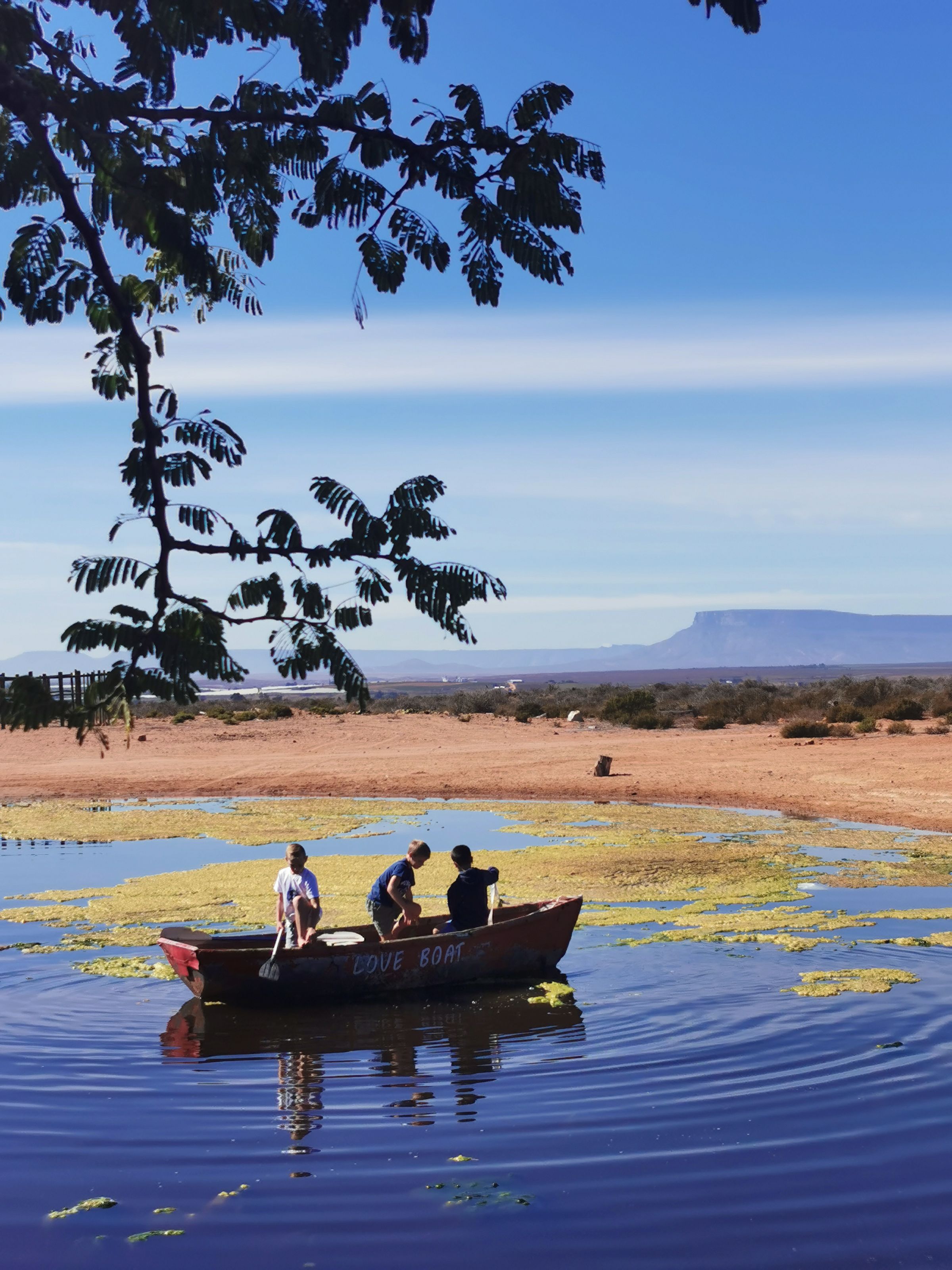
For thousands of schoolchildren in villages and rural communities across South Africa, a sport once considered out of reach is now within grasp. The shift says something important about fairness, opportunity and who gets to compete.
Rowing South Africa (RowSA) has spent years pushing the sport beyond its traditional strongholds, and the results are now visible at the highest levels of student competition. At the 2026 RMB Universities Boat Race in Port Alfred, a record 34 entries took to the water, with 60% of the rowers competing for the very first time. Five athletes from the development pipeline have already earned university scholarships at the University of Johannesburg (UJ).
The person at the centre of this effort is Virginia Mabaso, RowSA’s Development Coordinator. Her path into the sport was unplanned. In 2007, she came from a background in healthcare finance and applied for an administrative role at RowSA, looking for a simple change. “I think it was by default back in 2007,” she said with a laugh. “Rowing had an admin finance position, and I applied. I was from the health sector. Actually, I was there for five years, and I was like, you know what, I need to change. Then I saw this, I applied, and that’s how I got into rowing.”
What began as a career move has become a mission: building a sport where every young person, regardless of background or bank account, gets a fair chance to hold an oar. Through grassroots initiatives, indoor rowing competitions and targeted province-by-province outreach in places like Limpopo, Mpumalanga and the Eastern Cape, RowSA is introducing thousands of learners to rowing.
Mabaso is candid about how talent is spotted when indoor rowing machines, known as ergometers, are brought into rural schools. There is no complex science, she admits. The approach relies on giving children direct access and letting raw ability show itself. “None of us know that. We also don’t know that,” she told Eyewitness News when asked how she identifies future stars. “But what we go by is the fact that we are obligated to create an opportunity for a child. We assess them the first time we see them. That’s when they surprise us… it affirms the model that we have to say if we had not created that opportunity or that level of access in all these villages, we would have missed all these kids.”
That grassroots momentum is feeding directly into higher levels of competition, and visible role models are a crucial part of the transition. Olympic gold medallist Sizwe Ndlovu now coaches at UJ, giving young athletes from diverse backgrounds a leader who shares their story. “Sizwe serves as an inspirational figure,” Mabaso says. “I am seeing someone of colour that the kids can look up to and say, ‘Oh, if Sizwe can do it, someone like me, I can do it.’ All the kids from the development provinces have seen Sizwe, and the fact that he has now landed a hand to say, ‘I will start taking kids from the development program into varsity and have them row for UJ,’ means that the sustainability bridge we are trying to grow is already established.”
The next frontier, in Mabaso’s view, lies in TVET colleges. “A lot of our kids are not making it to universities; they end up at TVET colleges,” she noted. “Including them in the ecosystem of sport at university level will grow the pool of under-23 athletes as well.”
None of this growth would be possible without long-term support. Rand Merchant Bank (RMB) recently marked a 10-year partnership with RowSA, helping lower the financial barrier to entry for student-athletes across the nation. Michael Edwards, RMB’s Sponsorship Marketing Lead, points to the changing face of the sport as the most rewarding outcome of the decade. “If I look at impact, the most noticeable impact that I can see at the RMB Universities Boat Race in particular is the diversity of participation,” he explained. “You see some of these students coming from the less-funded universities around the country, you can see something in them change as they are rowing six kilometres down the river, and they’ll carry that with them for the rest of their life.”
For Edwards, university rowing is the ultimate bridge between raw talent and world-class success. “When you give South African talent the opportunity and the platform to perform and thrive, they do,” he said. “We have brilliant athletes in this country and our medal tally over the years shows it.”
The broader story of how rowing is reaching new communities, from village schools to university boathouses, is explored further in EWN’s coverage at https://www.ewn.co.za/2026/10/19/from-village-to-varsity-the-changing-face-of-south-african-rowing.
By pairing sustainable funding with grassroots determination, leaders like Mabaso are proving that rowing belongs to everyone. The open question now is how far the pipeline can stretch, from village ergometers to the world stage.