Netball South Africa’s leadership has spent the past year rebuilding the operational machinery of the sport, and with the 2027 Netball World Cup less than a year away, the question of whether that machinery actually works is no longer abstract. President Mami Diale, who succeeded Cecilia Molokwane a year ago this month, inherited an organisation under a compliance mandate from World Netball and a playing programme in transition. Her task has been to make both function again.
The compliance piece came first. Molokwane, Diale’s predecessor and former vice-president’s superior, was initially suspended from the sport in April 2025 after reports by members of Netball South Africa. World Netball suspended and formally charged her, though the specific charges have not been publicly disclosed. Daily Maverick sources previously alleged financial mismanagement and the systematic purging of internal rivals. The global body, whose independent panel is still investigating after a number of delays, mandated that the local federation remove Molokwane or risk a blanket ban on South African netball while the probe continued. Molokwane eventually stepped away but has always maintained her innocence, saying she was being painted as a “monster”.
Diale, who acted in the presidency before being confirmed permanently, says the federation complied with the constitutional mandate set for it, and that this compliance is what keeps the delivery pipeline intact. “Our relationship with World Netball is good because we complied in terms of the constitutional mandate [it set for us]… If we were resistant to World Netball’s directives, it would have meant our players would have been affected negatively,” she told Daily Maverick in an exclusive interview.
The operational reset also required repairing an internal structure that sources have described as having run under a tight ship, where opponents of the former president faced the full weight of her wrath and influence, and where it eventually took World Netball’s intervention to force change. Diale’s answer has been an organisational culture push. “My announcement as president felt like the storm was over, because netball went through a lot while I was still vice-president. So, when I stepped in, I knew what Netball South Africa needed in order to restore its dignity within a short space of time,” she said. “We also made sure that we preached a message of unity with the netball fraternity. We preached inclusion; that was our strategy. This as opposed to dividing members by saying, ‘Before the elections, you belonged to a certain camp, so now you are no longer part of netball.’ Unity is power.”
Delivery, in Diale’s framing, is measured by whether players are served. “As Netball South Africa, we are saying the players are at the centre of netball. We need to always put them first and us [as administrators] must stand behind them. At all times, the players must benefit,” she said, a pointed contrast with a South African administrative culture often criticised for letting boardroom dysfunction overshadow athletes.
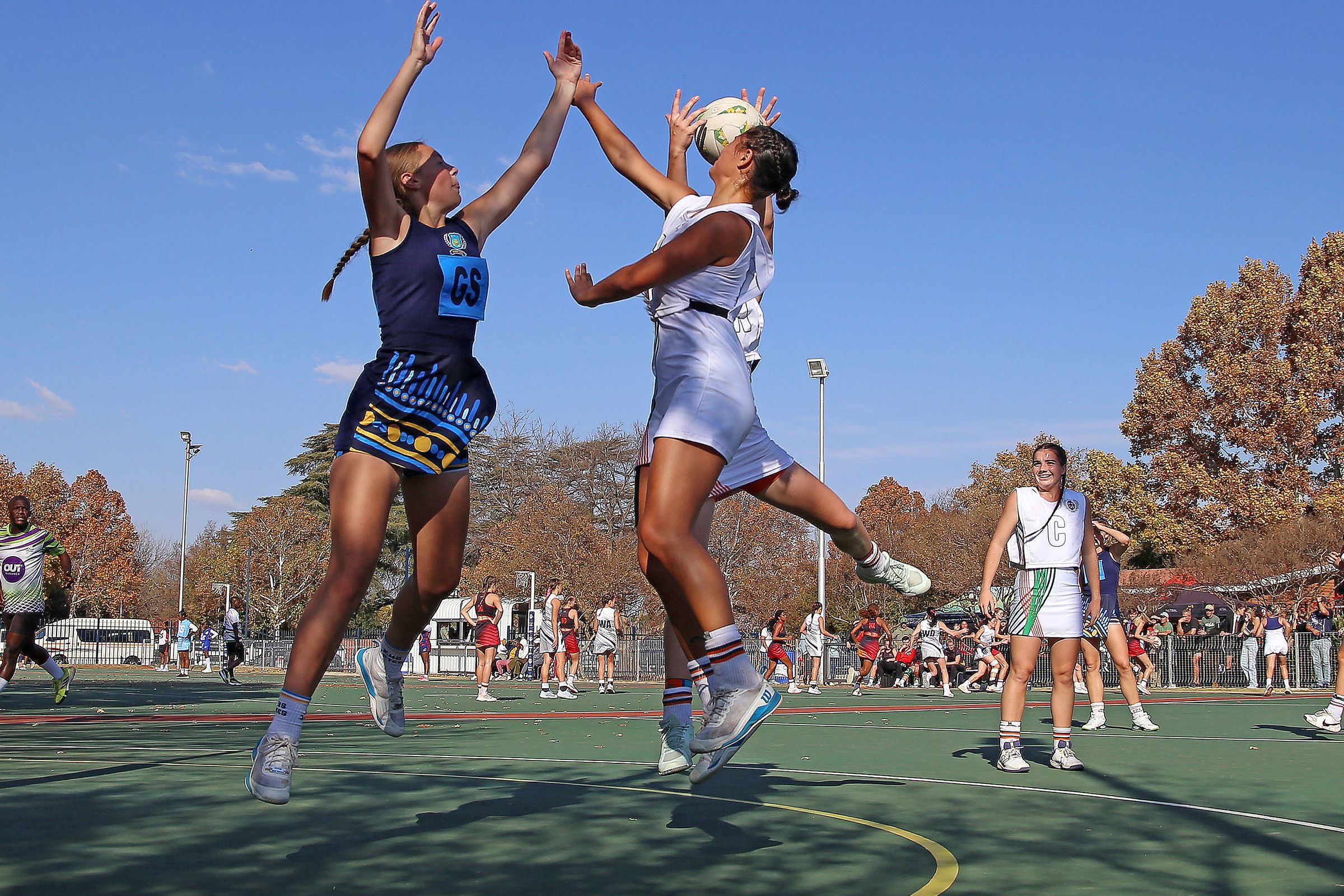
On the ground, the playing programme is being rebuilt around a hard constraint: experience has left. The Proteas have bid farewell to veteran key players including former captain Bongi Msomi, Phumza Maweni and, most recently, Karla Pretorius, each with well over a century of international caps. Coach Jenny van Dyk has responded by deliberately using competition as a testing ground. South Africa took a heavily rotated and experimental squad to the 2026 Africa Netball Cup in Nairobi, Kenya, in September, with van Dyk using the tournament to trial new combinations, expose younger players to international competition and build squad depth ahead of the World Cup in Sydney, Australia, from 25 August to 5 September 2027.
The results were mixed but, by Diale’s account, fit for purpose. The women’s team, already qualified for the World Cup through their fifth-place global ranking, were edged 56-53 by Uganda in the final, missing a third successive title. The men’s team, the Proteas Warriors, beat Eswatini in their final to retain their trophy. “They remain the kings of Africa, so we are happy about that. We have been very intentional about promoting the men’s team. We want to give them the same opportunities as the women’s team,” Diale said. Of the women’s defeat, she argued the coach’s aim was to test different players and combinations, making the tournament “a success in that regard because that was our second team that we took in preparation for the World Cup”.
The delivery targets are explicit. The Proteas last reached a World Cup podium three decades ago, taking silver behind Australia, with a fourth place in England in 2019 the best finish since, and a sixth place as hosts in 2023. “A podium will be good for us, but we are definitely looking for our team to be counted among the top four in the world,” Diale said. The next checkpoint comes in February 2027, when the women’s team faces England away from home. Netball South Africa, Diale said, is ready to offer whatever support the team needs to improve on their previous World Cup showing.