Introduction
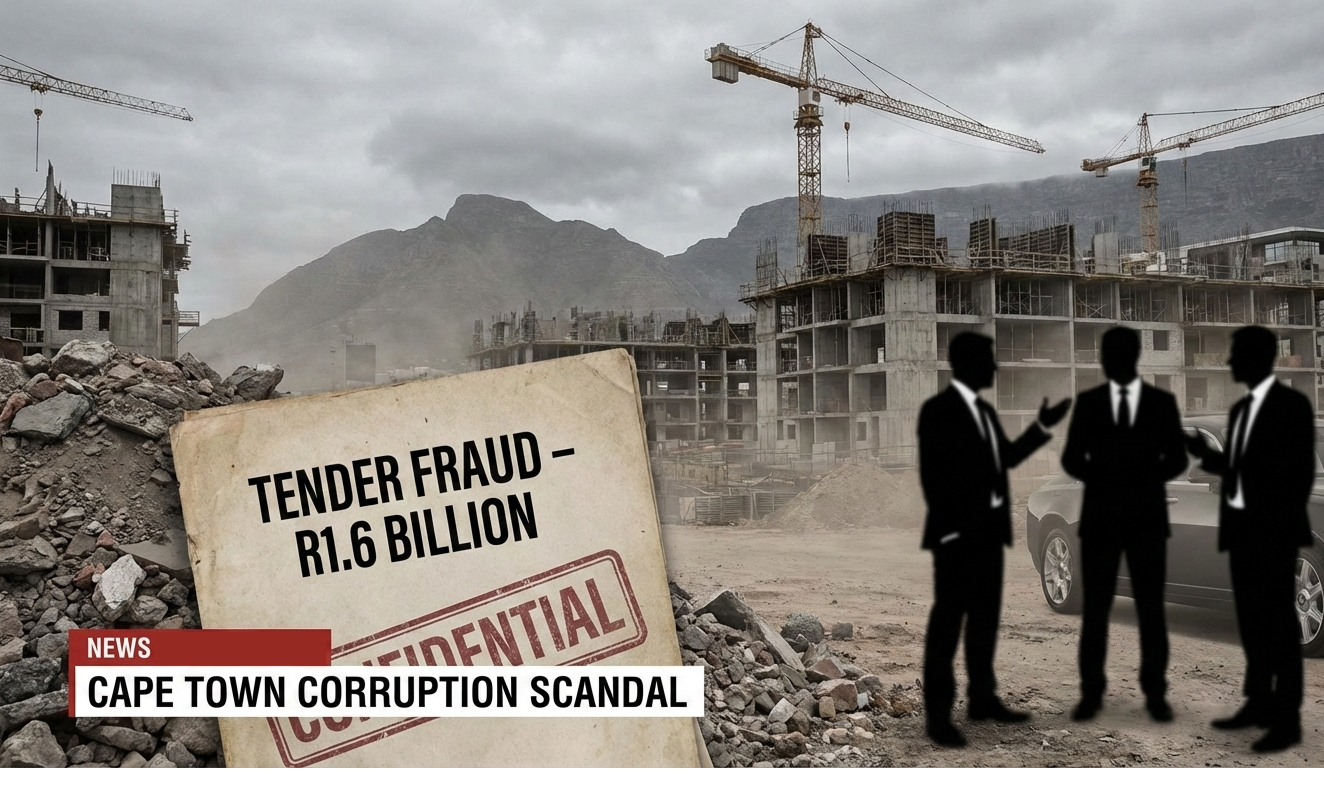
The recent Tender Fraud scandal in Cape Town has rocked the City’s governance, with three officials under investigation for their involvement in a R1.6 billion construction contract. This discovery has ignited public concern about the integrity of procurement processes and the city’s ability to manage taxpayer money responsibly. The scandal emerges amid South Africa’s broader efforts to clean up public administration, especially as the country hosts G20 discussions about global governance.
The case raises key questions about how corruption continues to plague municipalities and the lack of transparent systems to prevent such fraud. For many citizens, the stakes are not just financial—they are about restoring trust in leadership and ensuring accountability in future public contracts.
Tender Fraud in the Spotlight: R1.6 Billion Construction Contract
The Tender Fraud at the heart of this scandal involves a massive R1.6 billion construction contract meant to address key infrastructure challenges in Cape Town. However, rather than serving the public interest, the project has now come under suspicion due to alleged manipulation of the tender process.
Reports suggest that the evaluation of bids may have been influenced by outside factors, leading to an unfair selection of contractors. Potential fraudulent activity includes altered evaluation scores, misrepresented bid proposals, and possibly a lack of fair competition for the tender.
This level of corruption is particularly concerning given the scale of the project. The R1.6 billion in public funds could have been directed toward vital services, like housing and transport infrastructure. Instead, it now serves as a glaring example of the vulnerabilities in the city’s procurement systems.
Three City Officials Under Investigation for Tender Fraud
Three senior officials within the City of Cape Town are currently under investigation in connection with the Tender Fraud scandal. These officials were responsible for overseeing and evaluating the tender process, which has come under scrutiny for possible misconduct.
The investigation is focused on whether these officials abused their positions for personal gain or to favour certain contractors, violating procurement regulations. Preliminary reports suggest that irregularities occurred during both the bidding and evaluation phases of the contract award. The officials in question are accused of manipulating the process to ensure the contract went to selected bidders, who may have had personal or political ties to them.
As the investigation progresses, calls for accountability and transparency have intensified. There are growing demands for the officials to be suspended pending the final outcome of the probe, in order to maintain the integrity of the ongoing investigation.
Tender Fraud and Its Impact on Governance and Accountability
Tender Fraud of this magnitude highlights serious governance flaws, particularly in how public funds are managed. Cape Town, like many municipalities across South Africa, has faced repeated challenges with corruption, particularly in the allocation of large tenders.
The Tender Fraud investigation underscores the need for more robust checks and balances in procurement systems. Public procurement is meant to be transparent and fair, with strict adherence to regulations that ensure taxpayers’ money is used efficiently. When these processes are undermined, public trust in local government plummets.
The case also raises broader concerns about accountability within municipal systems. If corruption can flourish in such high-profile contracts, it is likely that smaller projects or less visible contracts are similarly vulnerable to mismanagement and fraud. This scandal emphasizes the need for immediate reforms to restore credibility to municipal governance and procurement.
The Role of Transparency in Preventing Tender Fraud
One of the key factors that may have allowed the Tender Fraud to happen is the lack of transparency in the procurement process. In many municipalities, including Cape Town, there is limited external oversight, which creates opportunities for officials to act in their own interests rather than those of the public.
Transparent systems are essential to ensuring that tenders are awarded fairly. This means providing clear information on the criteria used to evaluate bids, publishing all tender documents, and ensuring that evaluations are conducted independently. By making procurement processes more visible, municipalities can significantly reduce the likelihood of fraud and corruption.
This scandal in Cape Town highlights the urgent need for greater transparency in all levels of government. Only by opening up these processes to public scrutiny can South Africa begin to rebuild trust in its public institutions and protect taxpayers from future fraud.
The Role of Political Influence in Tender Fraud
Tender Fraud often involves political interference, where tenders are awarded not based on merit, but due to political connections or financial kickbacks. In Cape Town’s case, there are suggestions that political influence may have played a role in manipulating the tender process.
Public officials with ties to specific contractors or business interests may use their position to secure lucrative contracts for favoured companies, even when these companies may not be the best-suited for the job. This type of corruption is particularly damaging because it distorts the competitive bidding process and deprives citizens of quality services at reasonable costs.
The political nature of such fraud also complicates investigations, as officials may have protections or political backing that allow them to avoid accountability. To combat this, it is essential for independent oversight bodies to monitor political interference in procurement decisions and ensure that tenders are awarded based solely on merit and need.
How This Tender Fraud Case Fits Into South Africa’s Anti-Corruption Efforts
The Cape Town Tender Fraud investigation comes at a time when South Africa is actively working to combat corruption within government systems. This ongoing investigation reflects broader anti-corruption drives aimed at cleaning up public procurement, improving transparency, and holding officials accountable.
However, while South Africa has made strides in fighting corruption at the national level, local governments continue to struggle with systemic fraud. Cases like this one expose how deeply corruption is embedded in procurement practices across municipalities, and how vulnerable these systems are to exploitation.
Despite these challenges, the investigation offers hope. If the case results in successful prosecution, it will send a strong message to other municipalities that corrupt behaviour will not be tolerated. It will also demonstrate that South Africa is serious about using its legal and institutional frameworks to ensure fair governance and public accountability.
Public Reaction and Political Fallout from the Cape Town Tender Fraud
The public reaction to the Tender Fraud scandal has been one of outrage and disappointment, particularly given Cape Town’s image as one of South Africa’s more stable and well-managed cities. Citizens are demanding full accountability for those involved and are calling for stronger mechanisms to ensure that public funds are handled transparently.
Political parties across the spectrum have condemned the officials involved in the fraud, with opposition parties calling for immediate action, including the suspension of the implicated officials. Civil society groups are calling for a full investigation into the tender’s approval process and are pushing for more stringent procurement regulations.
The fallout from this scandal could have significant political implications for Cape Town’s leadership, especially if the investigation reveals widespread corruption or political interference. The case highlights how corruption scandals can have long-lasting effects on a city’s reputation, political stability, and ability to attract investment.
What Can Be Done to Prevent Future Tender Fraud?
To prevent future Tender Fraud, municipalities must implement stronger anti-corruption measures, more transparent procurement practices, and independent oversight bodies.
One critical reform is to digitise and standardise the tender process. Digital platforms can increase transparency by ensuring that all tender documents, evaluations, and decisions are made accessible to the public and independent auditors.
Moreover, municipalities must introduce regular audits and random checks of procurement processes. This would ensure that any irregularities are caught early, before they escalate into larger-scale fraud.
Finally, strengthening whistle-blower protections and encouraging public involvement in oversight can help expose corruption before it becomes widespread. Citizens should have clear avenues to report suspicious activities without fear of retaliation. By fostering a culture of accountability, South Africa can work towards eliminating Tender Fraud and rebuilding trust in local governance.
FAQs
Q1: What is the Cape Town Tender Fraud case about?
The Cape Town Tender Fraud case involves an investigation into a R1.6 billion construction contract, with three city officials accused of manipulating the tender process.
Q2: Why is this case important for South Africa?
The case highlights ongoing governance challenges, raising concerns about transparency in public procurement, especially as South Africa hosts the G20.
Q3: What measures can prevent future Tender Fraud?
Implementing stronger digital procurement systems, conducting independent audits, and enhancing transparency and whistle-blower protections are key to preventing future fraud.
Conclusion
The Cape Town Tender Fraud case has exposed deep vulnerabilities in the city’s procurement processes, leading to widespread calls for greater transparency and accountability. As three officials face investigation, the case underscores the urgent need for stronger anti-corruption measures in local governance.
The outcome of this investigation will determine whether Cape Town and South Africa as a whole can restore public trust and protect taxpayers from future fraud. By implementing comprehensive reforms, South Africa can begin to address the systemic weaknesses that allow Tender Fraud to persist.